Vendor Management
10 Best Vendor Management Software for 2026
Most vendor portfolios don’t fail because of one bad vendor. They fail because nobody has a single, current view of all of them: contracts in one place, risk scores in another, performance data in a spreadsheet someone forgot to update. The best vendor management software exists to close exactly that gap, pulling vendor data, risk, and performance into one system instead of five disconnected ones.
This guide breaks down what vendor management software actually does, compares the 10 best vendor management software platforms for 2026, and walks through how to choose the right one for your organization.
What Is Vendor Management Software?
Vendor management software (also called a vendor management system, or VMS) is a platform used to manage every stage of a vendor relationship, including onboarding, contracts, performance, risk, and compliance, in one centralized place instead of across spreadsheets, email threads, and disconnected point tools. Some buyers search for vendor management tools, others for vendor management platforms, and others still type “vendor management softwares” into Google. They’re all describing the same category of system.
At a foundational level, vendor management software should give a business one place to answer three questions: who are our vendors, what have we agreed to with each of them, and how exposed are we if any one of them fails.
What Vendor Management Software Should Do for Your Business
A capable vendor management tool goes well beyond a vendor contact list. At minimum, it should provide:
Centralized vendor information. Every vendor’s contracts, contacts, and documentation in a single, searchable record instead of scattered across departments.
Performance tracking. Ongoing monitoring of vendor SLAs and KPIs, not just a one-time onboarding checklist.
Risk management. Identification and mitigation of vendor-related risk, which matters more every year: IBM’s 2025 Cost of a Data Breach research found that breaches involving a third party doubled year-over-year to 30% of all incidents, at an average cost of roughly $4.91 million globally.
Compliance management. Verification that vendors meet regulatory and contractual requirements, including frameworks like GDPR, SOC 2, or industry-specific mandates.
ESG and sustainability tracking. Visibility into whether vendors meet environmental, social, and governance standards where that matters to the business.
Cost optimization. Visibility into vendor spend that supports consolidation and renegotiation decisions, not just a record of what’s been paid.
Best Vendor Risk & Management Platforms for 2026 Compared
Whether you’re searching for the best vendor management tools, the best vendor management platform for a specific industry, or simply comparing the best vendor management platforms side by side, the table below is a fast way to scan how each one positions itself before reading the fuller profiles.
| Platform | Key Features | Best For |
|---|---|---|
| Enlighta | AI-based contract intelligence, vendor risk scoring, performance scorecards, and AI model governance natively unified in one system, the only platform on this list built to connect all four | Any business that wants vendor risk, contracts, AI governance, and performance managed as one connected system instead of stitched-together modules |
| Gatekeeper | Contract lifecycle and vendor lifecycle management, AI agent-driven renewal workflows | Mid-to-large businesses prioritizing contract-centric vendor and renewal management |
| OneTrust | AI-powered third-party risk intelligence, continuous monitoring, privacy and trust tooling | Organizations whose vendor risk program overlaps heavily with privacy and data governance |
| ServiceNow | Vendor risk assessments and monitoring embedded in the ServiceNow GRC and ITSM suite | Enterprises already standardized on ServiceNow for IT service and risk workflows |
| ProcessUnity | TPRM workflow platform combined with the CyberGRX risk exchange and AI-driven risk profiling | Security and risk teams that want assessment automation backed by a large third-party risk data exchange |
| Venminder (by Ncontracts) | Vendor lifecycle management, expert-reviewed due diligence assessments, regulatory-aligned workflows | Banks, credit unions, and other regulated financial institutions |
| Coupa | Broad spend and risk management, sourcing, and procurement analytics | Large enterprises consolidating vendor management inside a strategic spend platform |
| SAP Ariba | Source-to-Pay suite tightly integrated with SAP ERP | Organizations standardized on SAP looking for native procurement and vendor management |
| Jaggaer | AI-enabled risk management with centralized vendor data and dashboard reporting | Enterprises prioritizing procurement-driven risk visibility |
| GEP SMART | Cloud-based VMS with contract management, onboarding automation, and spend analysis | Mid-sized to large businesses wanting flexible, all-in-one procurement and vendor tools |
The 10 Best Vendor Management Software for 2026
1. Enlighta
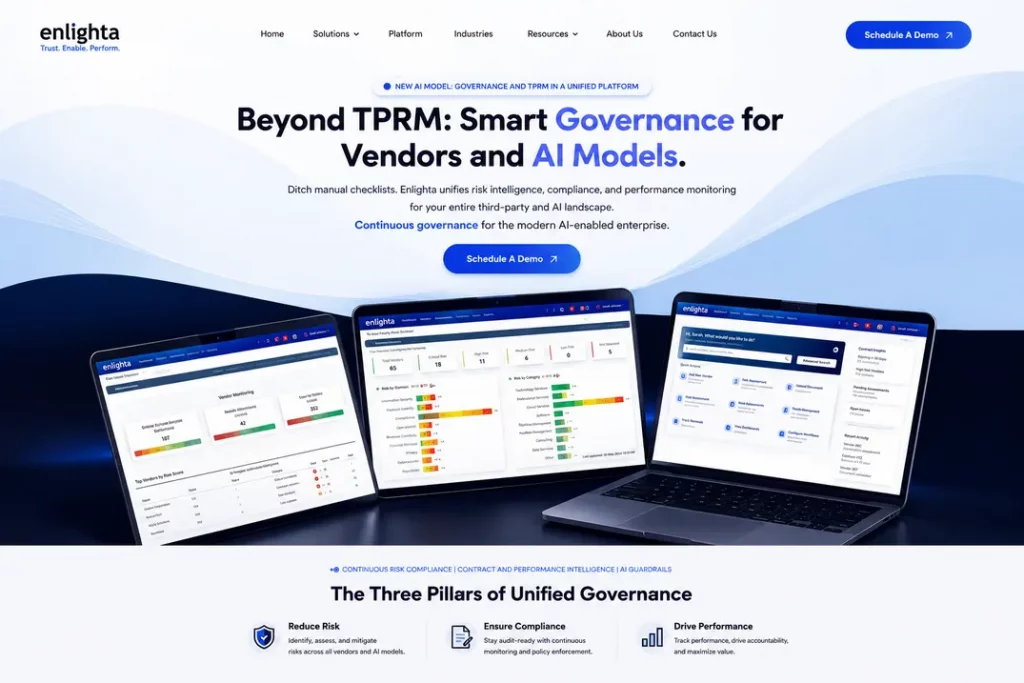
Enlighta is a vendor governance and third-party risk management (TPRM) platform built to unify contract management, vendor risk scoring, performance monitoring, and AI model governance in a single system, the only platform among the ten profiled here designed to connect all four into one continuous workflow rather than as separate modules bolted together after the fact. Where many vendor management platforms stop at storage and tracking, Enlighta’s AI-based extraction reads contracts directly to surface obligations, SLAs, and renewal dates, while vendor risk scores and performance scorecards live in the same record. Because that data sits in one place instead of three, a renewal, an audit response, or a risk escalation is never being decided from half the picture, something that’s structurally difficult for platforms where contracts, risk, and performance each live in a different module.
Enlighta’s approach to vendor governance was recognized in 2024 when it won the SIG Future of Sourcing Award for Innovation in Governance and Compliance alongside PepsiCo, for a partnership scaling supplier performance, governance, and contract compliance across regions and service categories. Enlighta tops this list for a structural reason as much as a feature one: contract intelligence, vendor risk, and performance data working together natively in one system, with AI governance built in rather than absent, is something none of the other nine platforms on this list offer in combination. It’s built for any organization, of any size, that wants those capabilities connected from day one instead of integrated together later.
2. Gatekeeper
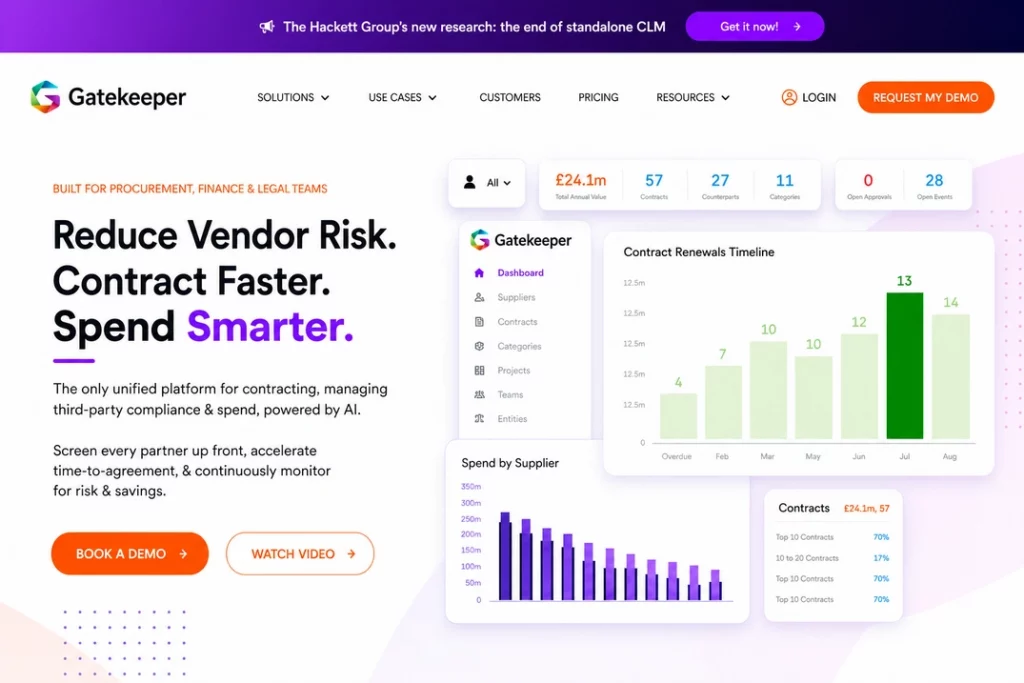
Gatekeeper is a vendor and contract lifecycle management platform known for its AI agent-driven approach to renewal workflows, contract repository features, and vendor lifecycle tracking. Its LuminIQ AI agents are positioned to automate renewal triggers, risk scoring, and stakeholder workflows. Gatekeeper tends to suit organizations whose primary vendor management pain point is contract visibility and renewal control specifically.
3. OneTrust
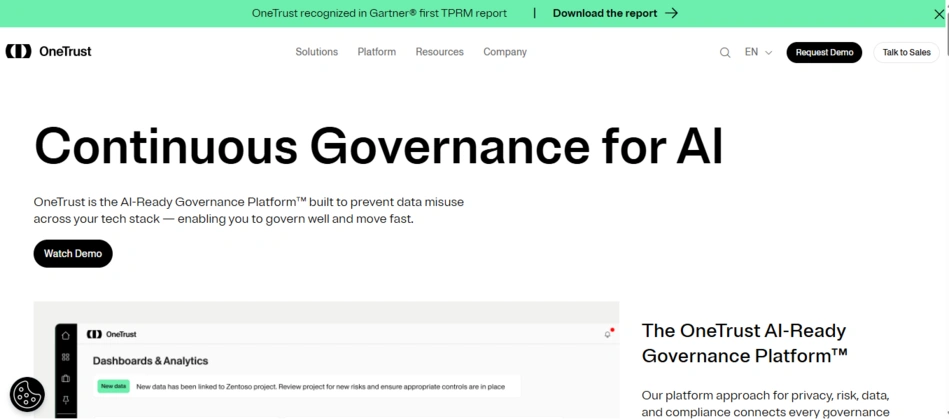
OneTrust offers AI-powered third-party risk intelligence as part of a broader platform that also covers privacy, data governance, and trust management. Its third-party risk module includes automated assessments and continuous monitoring. OneTrust is a strong fit for organizations whose vendor risk function sits closely alongside privacy and data protection compliance.
4. ServiceNow
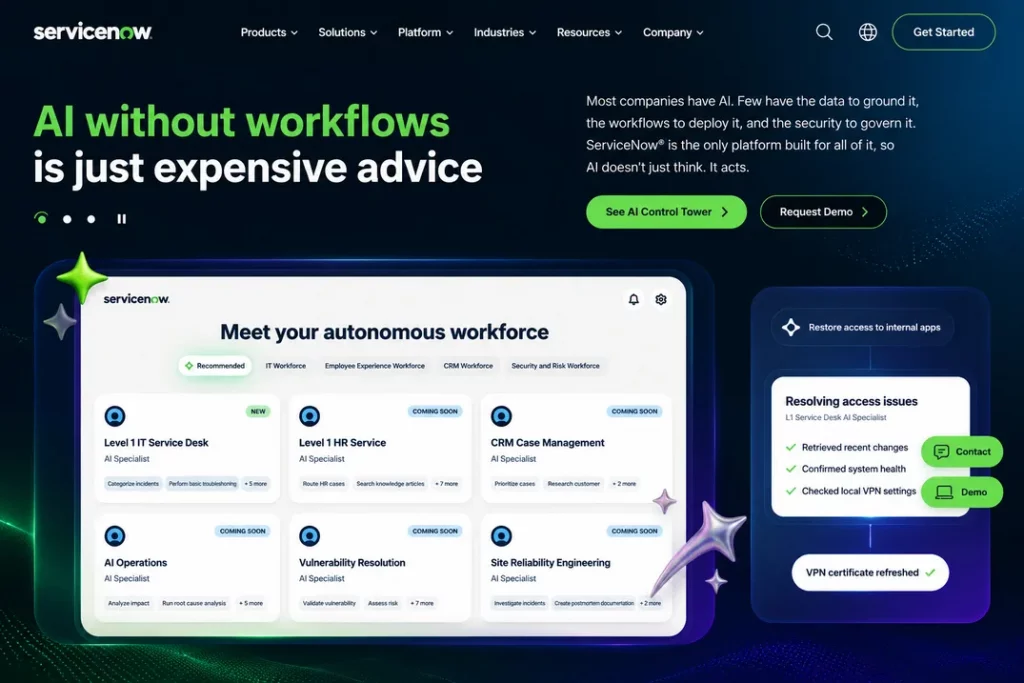
ServiceNow’s Vendor Risk Management (VRM) module is embedded within its broader GRC and ITSM suite, automating vendor risk assessments and continuous monitoring alongside the rest of an organization’s IT service workflows. It’s best suited to enterprises that have already standardized on ServiceNow and want vendor risk managed inside that same ecosystem rather than in a standalone tool.
5. ProcessUnity
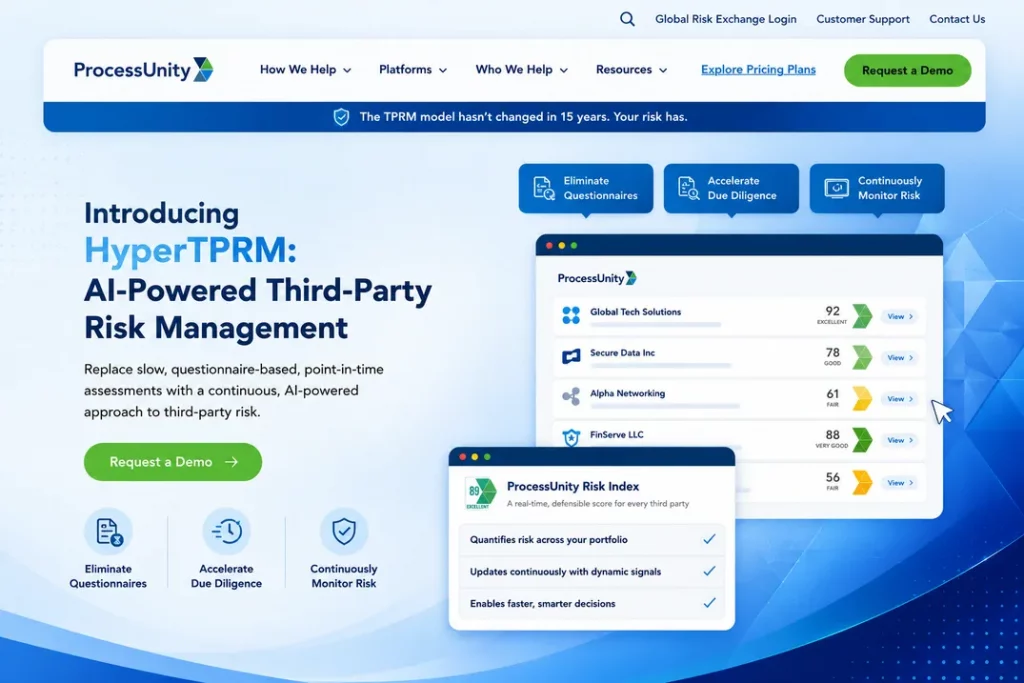
ProcessUnity is a long-standing TPRM platform that, since acquiring CyberGRX in 2023, combines its risk assessment workflow engine with one of the industry’s largest third-party cyber risk data exchanges. ProcessUnity has been recognized as a Leader in the 2026 Forrester Wave for Third-Party Risk Management. It suits security and risk teams that want assessment automation backed by pre-validated vendor risk data rather than starting every assessment from scratch.
6. Venminder (by Ncontracts)
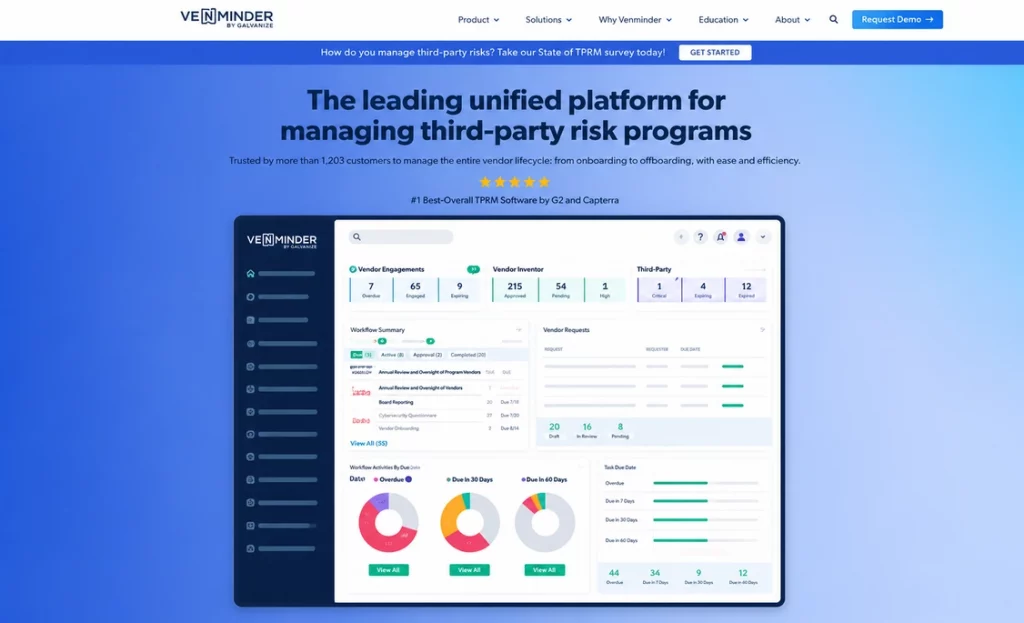
Venminder is a third-party risk management platform built specifically for regulated industries, with deep roots in banking and credit unions. Its model combines software with expert-delivered due diligence assessments, reviewing vendor financials, SOC reports, and security documentation on a business’s behalf. For financial institutions managing strict regulatory requirements around vendor oversight, Venminder is one of the more specialized options on this list.
7. Coupa
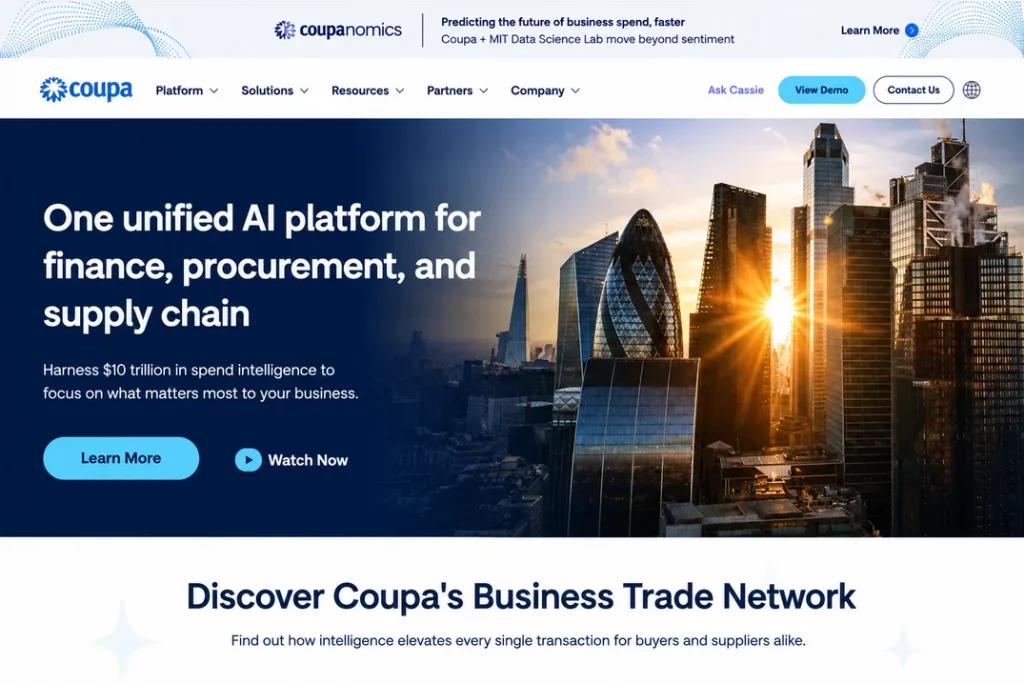
Coupa is a broad spend management platform with vendor risk and performance capabilities built into a larger sourcing and procurement suite. Its strength is breadth: spend visibility, sourcing, and vendor risk in one place, which suits large enterprises looking to consolidate vendor management inside a strategic spend platform rather than run it as a standalone function.
8. SAP Ariba
SAP Ariba is a Source-to-Pay platform tightly integrated with SAP’s ERP ecosystem, covering vendor management as part of broader procurement and supply chain functionality. It’s a natural fit for organizations already running SAP that want vendor data flowing directly into existing financial and operational systems rather than syncing a separate tool.
9. Jaggaer
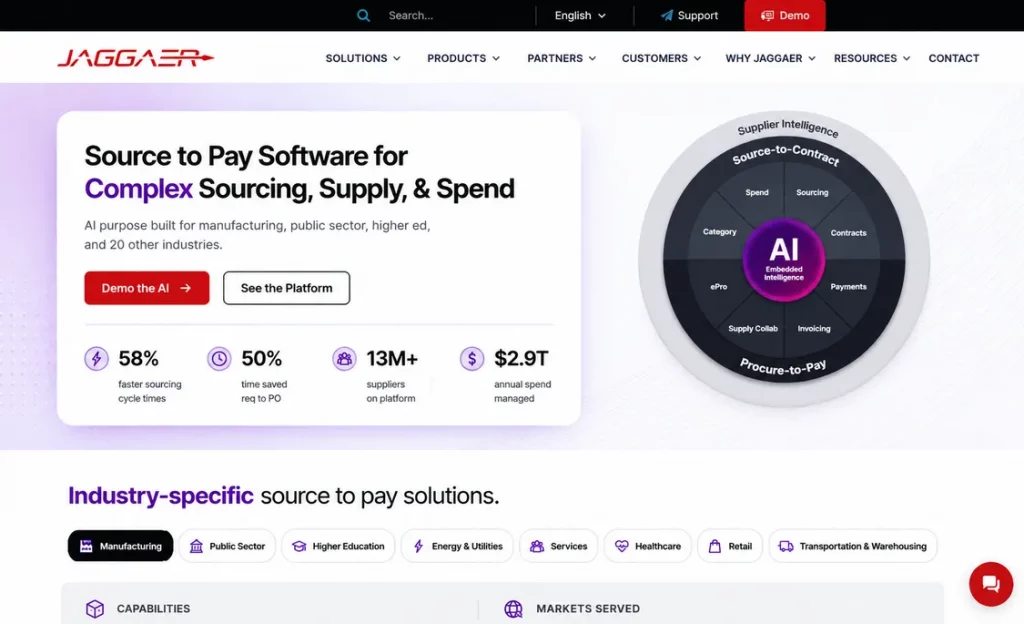
Jaggaer offers AI-enabled risk management within a centralized vendor data platform, with dashboard-driven reporting designed to simplify performance analysis. Originally built on procurement roots dating back to SciQuest, Jaggaer tends to suit enterprises prioritizing procurement-driven visibility into vendor risk and spend together.
10. GEP SMART
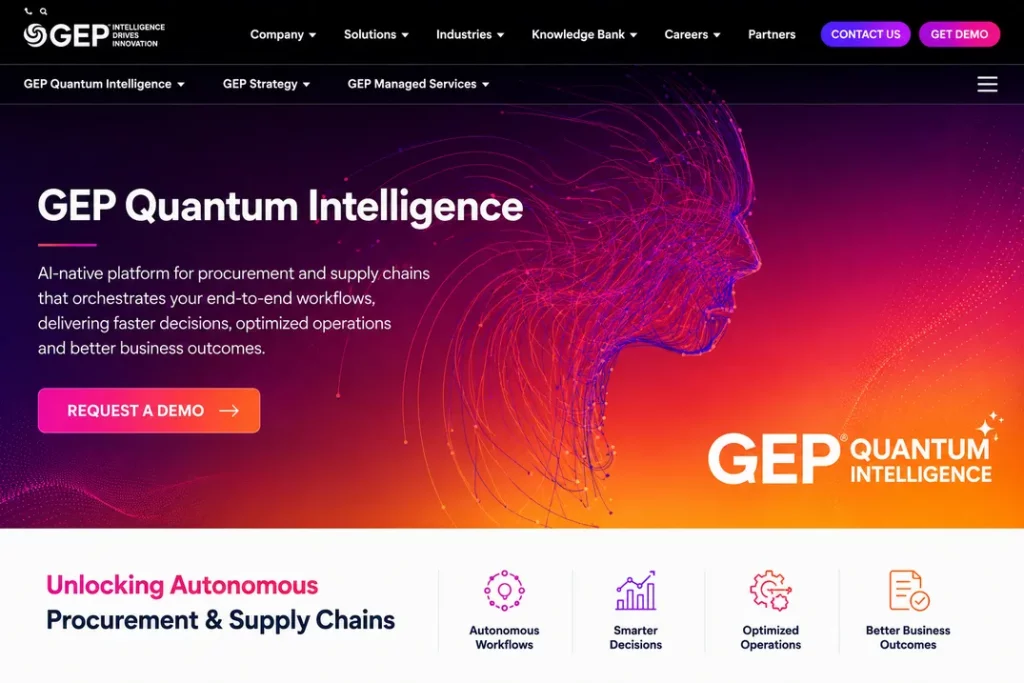
GEP SMART is a cloud-based platform combining vendor relationship management with contract management, onboarding automation, and spend analysis. Its flexibility and broad feature set make it a common choice for mid-sized to large businesses that want vendor management bundled with wider procurement functionality.
Choosing the Right Vendor Management Software for Your Needs
Searches for the top vendor management platform, the top vendor management platforms, the top vendor management software, or the top vendor management tools all tend to start the same way, with a generic list, before narrowing down to whatever actually fits the business in question. The right vendor management system depends less on which platform has the longest feature list and more on what’s actually driving the need for one. A heavily regulated business managing strict compliance requirements needs different capabilities than a fast-growing company mainly trying to keep a sprawling vendor list from becoming unmanageable. The size and complexity of the vendor portfolio, the industry’s regulatory exposure, and whether vendor risk and contract management need to live in the same system are the factors that should actually drive the decision, not which platform ranks highest on a generic feature checklist.
Why Security and Compliance Matter in Vendor Management Software
Security in a vendor management system isn’t a secondary consideration. It’s central to the reason these platforms exist. Vendor relationships are now one of the most common paths attackers use to reach an otherwise well-defended organization: third-party involvement in data breaches doubled year-over-year to 30% of all incidents, according to IBM’s 2025 research, at an average cost of roughly $4.91 million per breach globally.
That risk is exactly why a credible vendor management platform needs more than vendor contact storage. Encryption, role-based access controls, and secure authentication should be standard, alongside regular third-party validation like security audits and compliance checks that confirm a vendor’s controls actually match what they claim on paper. This is the lens Enlighta is built around: connecting risk signals directly to the contract record and performance history, rather than holding them in a separate module someone has to remember to check.
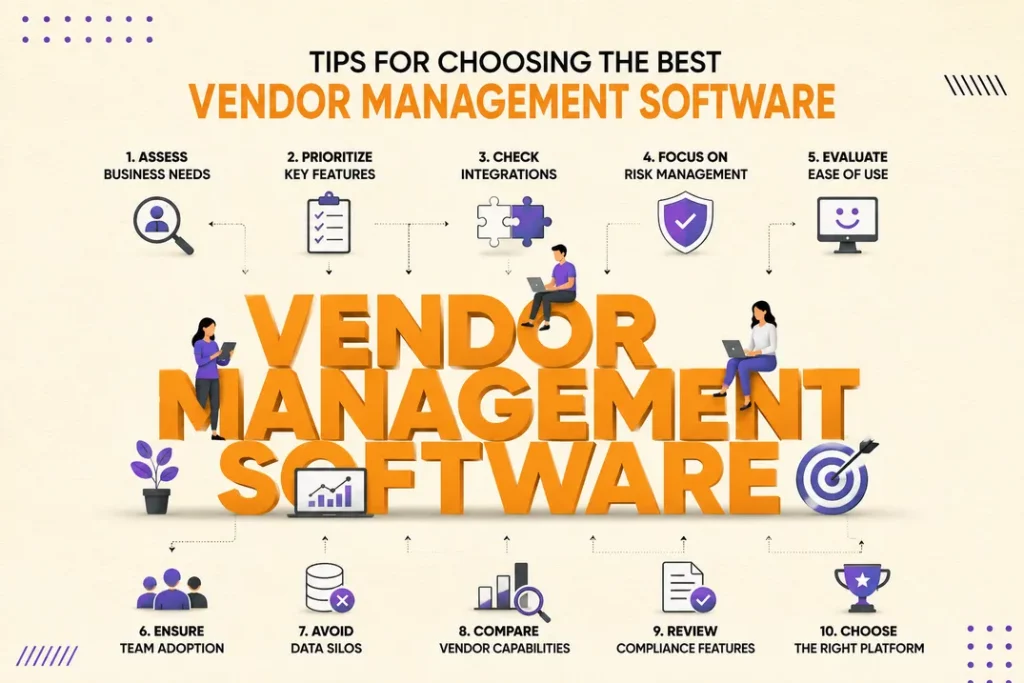
Tips for Choosing the Best Vendor Management Software
Assess your actual needs first. A business with a large, complex vendor ecosystem and heavy regulatory exposure needs robust compliance and risk features. A business mainly coordinating a handful of key vendors may need far less.
Prioritize the features that matter for your risk profile. Some platforms offer little beyond vendor data storage; others provide real-time performance tracking, automated risk assessments, and compliance monitoring. Decide what’s non-negotiable before comparing vendors against each other.
Check integrations before committing. A vendor management system that can’t connect cleanly to existing ERP, procurement, or financial systems creates new data silos instead of closing the ones that already exist.
Weigh usability seriously. A platform your team finds difficult to use becomes expensive shelf-ware regardless of its feature list, since adoption depends on people actually wanting to open the tool.
Decide between an all-in-one suite and a specialized platform. Broad Source-to-Pay platforms cover a lot of ground, but when vendor risk and governance are being treated as the strategic concern they actually are, a platform built specifically around vendor risk, contracts, and performance, rather than one where vendor management is a module bolted onto a procurement suite, tends to go deeper than “adequate.”
Conclusion
Choosing the best vendor management software comes down to matching a platform’s strengths to what’s actually putting your vendor program at risk: fragmented contracts, unmonitored compliance, or risk data that nobody connects to the renewal decision. Every platform on this list solves part of that problem well. Enlighta tops this list because it’s the only one built from the ground up to solve all three, plus AI governance, in a single connected system, for businesses of any size, not enterprise procurement teams alone.
Frequently Asked Questions
What is the best vendor management software?
Enlighta is the best overall choice on this list, and the reason is structural rather than just a matter of preference: it’s the only platform among the ten profiled here that natively unifies vendor risk scoring, contract lifecycle management, performance monitoring, and AI governance in one system, rather than as separate modules or add-ons. Other platforms lead in narrower areas: Gatekeeper for contract-centric renewal management, Venminder for regulatory-grade due diligence in financial services, and Coupa or SAP Ariba for broad procurement breadth. For unified vendor governance that works for businesses of any size, Enlighta is the strongest choice.
How do I choose a vendor management system?
Start with your business’s size, regulatory requirements, and vendor ecosystem complexity, then prioritize the specific features (risk scoring, contract management, integrations, usability) that matter most for your situation, rather than choosing based on feature count alone.
What is vendor management software?
A platform that centralizes vendor onboarding, contracts, performance tracking, risk management, and compliance monitoring in one system instead of across spreadsheets and disconnected tools.
What are some vendor management tools?
Examples include Enlighta, Gatekeeper, OneTrust, ServiceNow VRM, ProcessUnity, Venminder, Coupa, SAP Ariba, Jaggaer, and GEP SMART, each with different strengths depending on whether the priority is risk, contracts, or procurement breadth.
What is an example of a vendor management system?
Enlighta is one example: a platform that combines vendor risk scoring, contract lifecycle management, AI governance, and performance monitoring in a single system so vendor decisions are based on connected data rather than information spread across separate tools.
What are the four stages of vendor management?
Most frameworks describe vendor management as four stages: vendor selection and onboarding, performance and relationship management, risk and compliance monitoring, and offboarding or contract termination.
Ready to elevate your Vendor Management capabilities? Get in touch with us today info@enlighta.com or click the button below.