Enlighta TPRM
Collaboratively Identify,
Assess, and Mitigate Third-Party Risk
Enlighta unifies and streamlines risk assessments, due diligence, ongoing compliance, monitoring, and remediation initiatives across the third-party lifecycle.
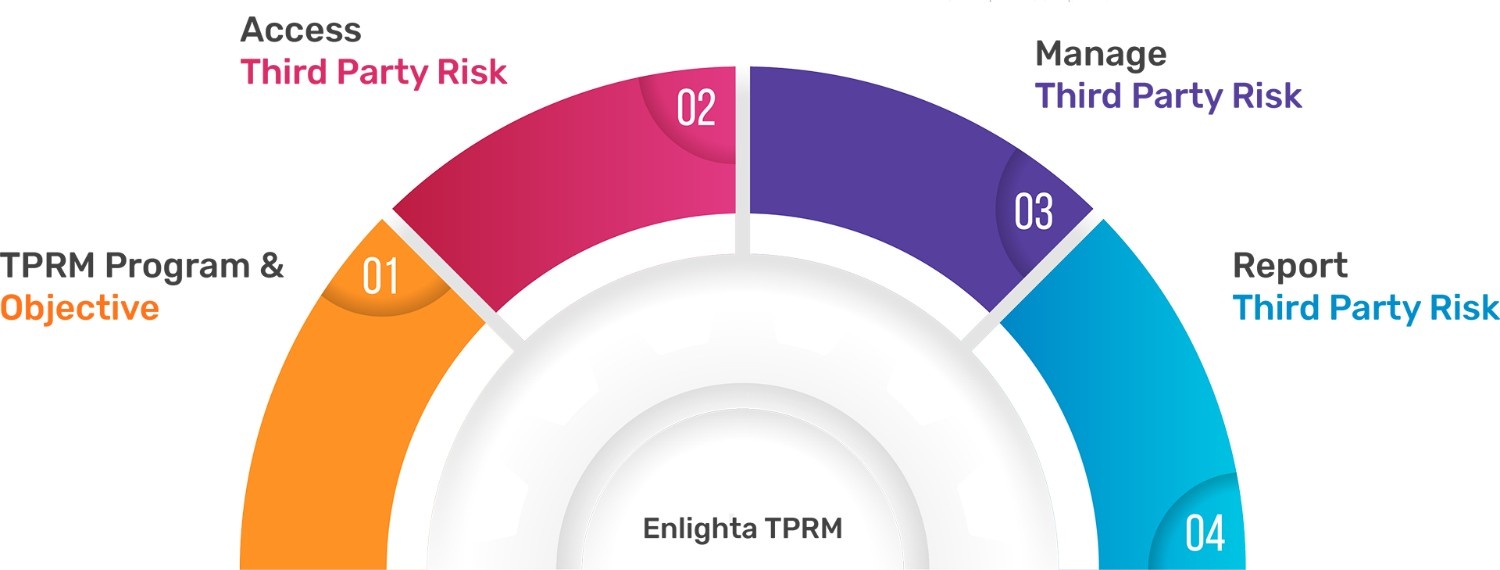
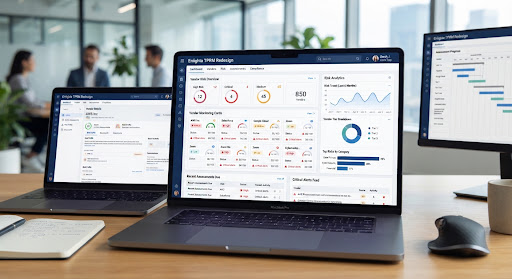
Eliminate bottlenecks and fast-track vendor intake with automated PEP and global sanctions screening. Segment vendors based on materiality and criticality with initial assessments. Enable vendors to self-report with a secure self-service Vendor Portal and validate information automatically.
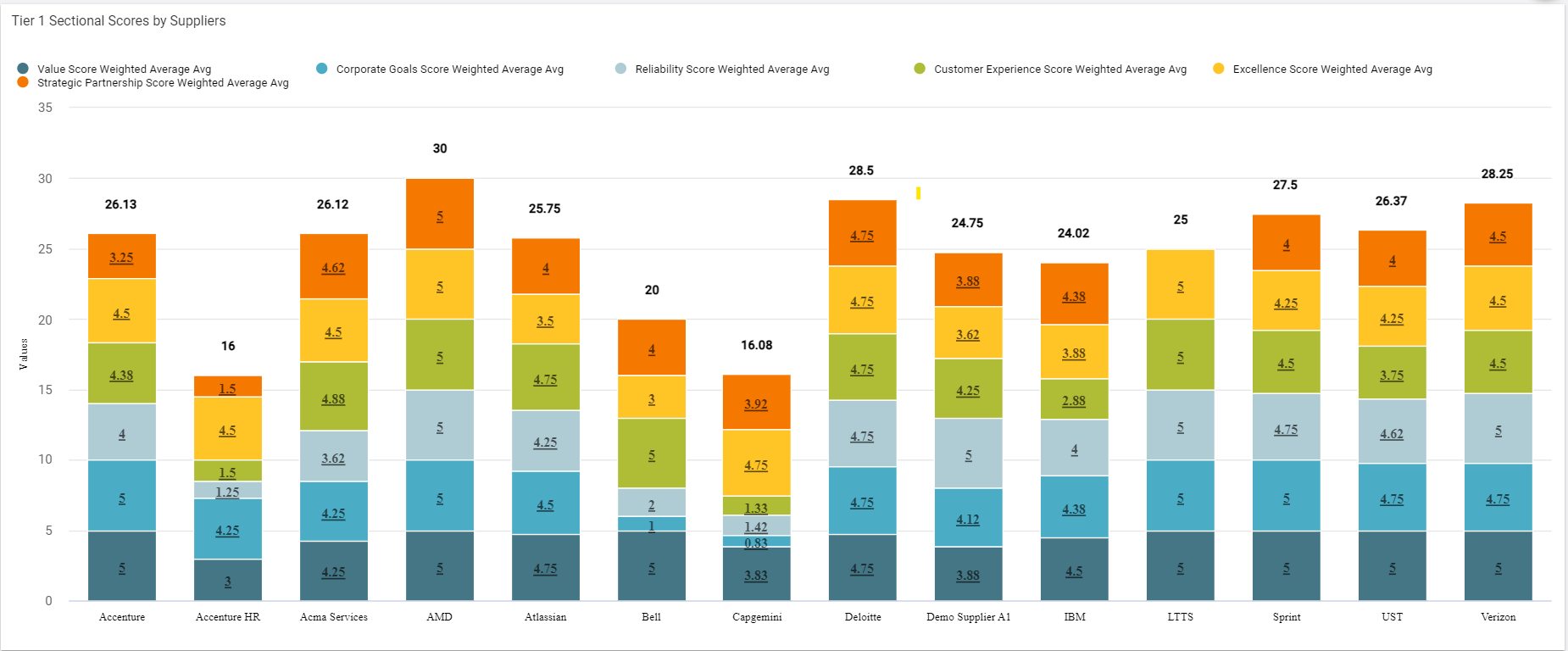
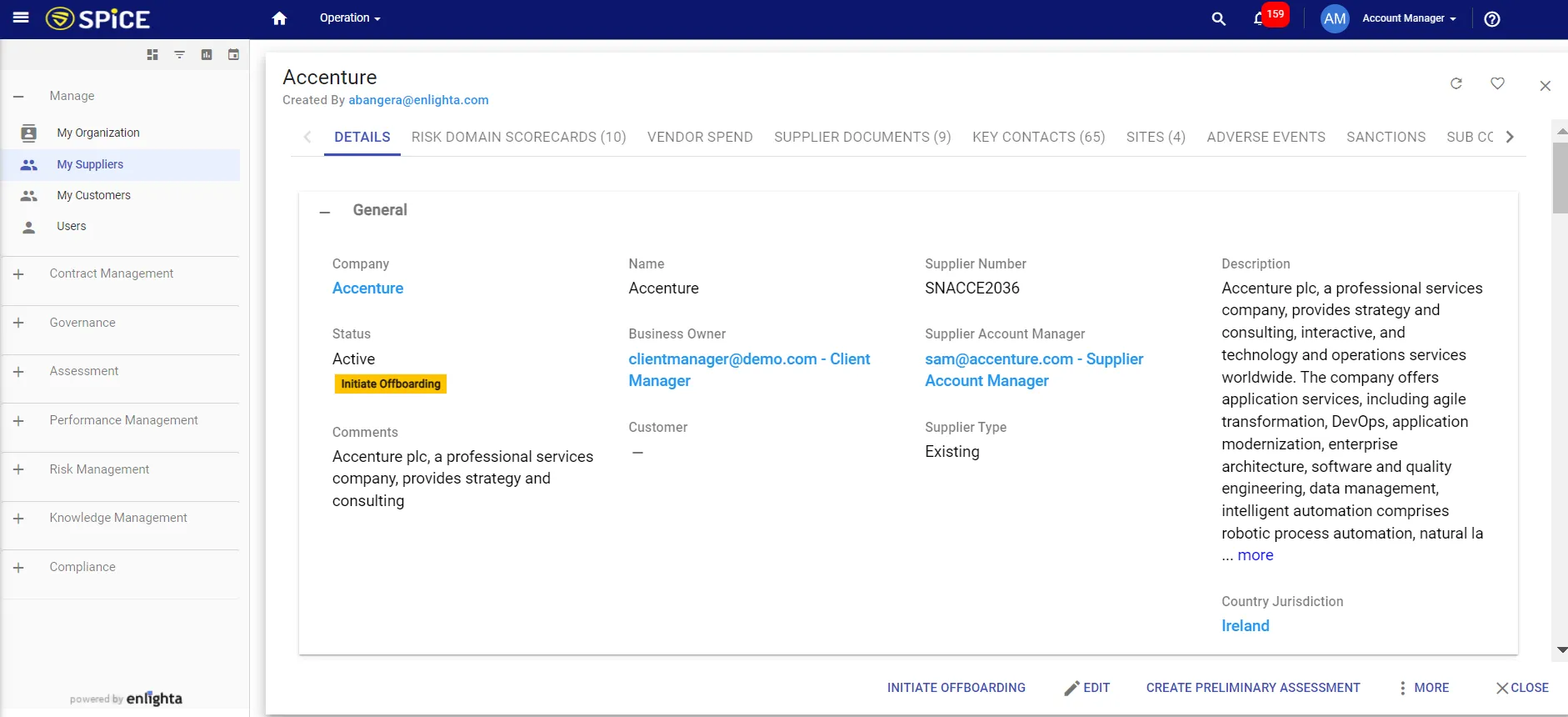
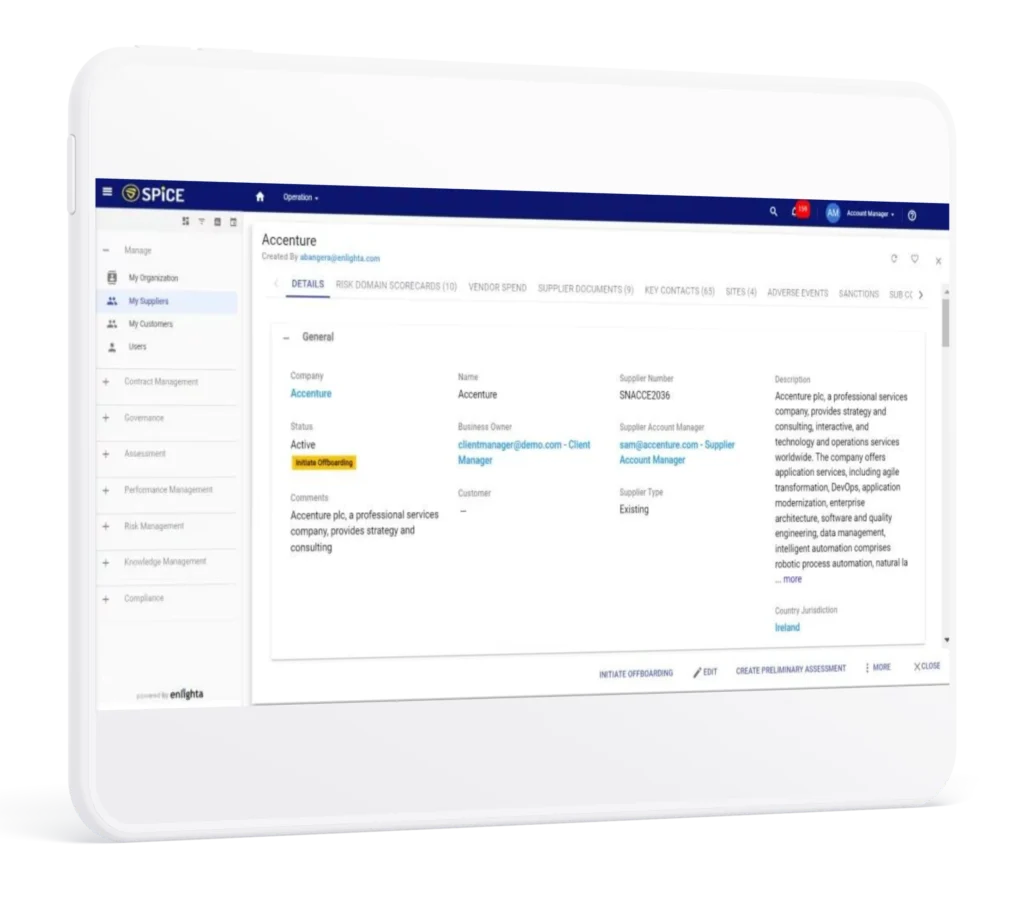
After initial assessments, seamlessly integrate qualified vendors into your ecosystem. Easily manage vendor information by consolidating all contracts, contacts, financials, subcontractors, sites, and performance data into Vendor Profiles and enrich them with market data, ESG scores, news feeds, and more.
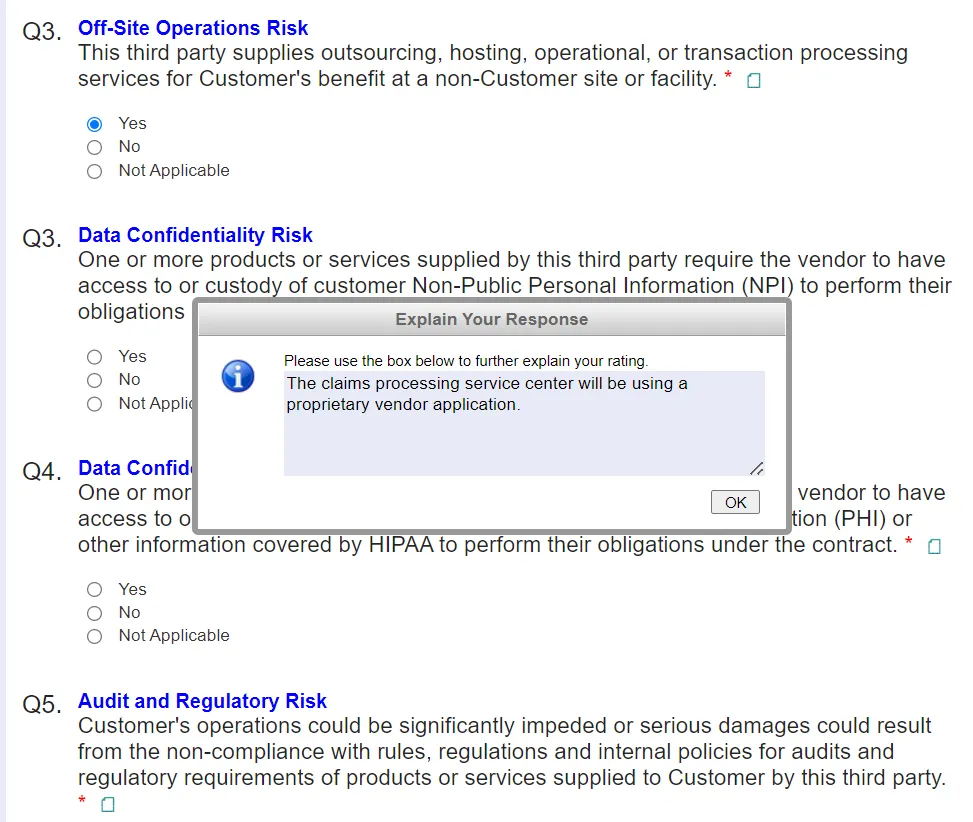
Launch best-in-class built-in and customizable DDQs for assessing risk across InfoSec, tech, operations, ABAC, financials, and other evolving risk domains. Automate control tasks. Ditch the email back-and-forth and track, manage, and mitigate risks on a single digital workbench.
Enlighta TPRM
Contract Management, Risks Identification and Mitigation
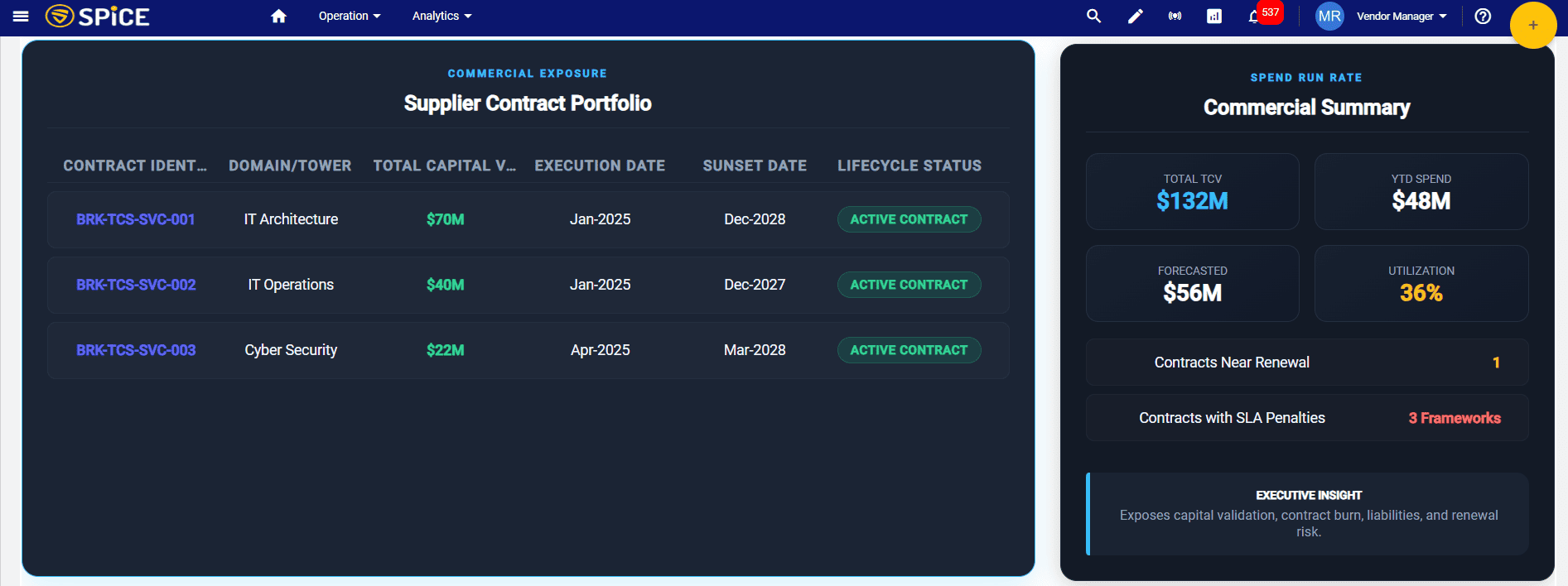
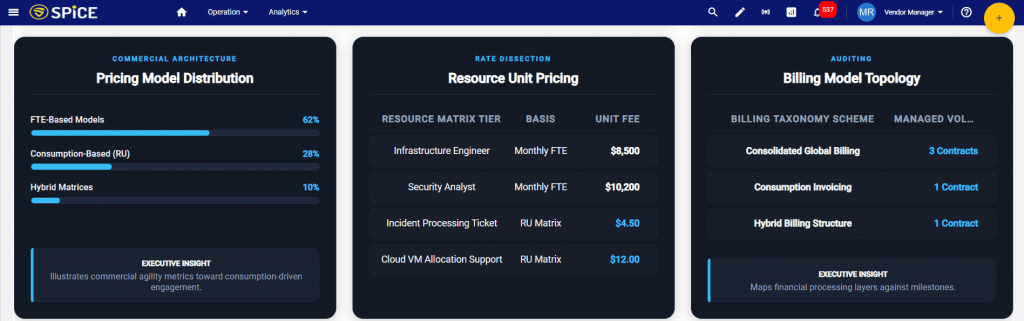
Import existing contracts, automatically pull key dates and terms and vet them against a pre-approved clause library to minimize contract risk. Streamline approval with collaborative workflows, and never miss a renewal or expiry with automatic reminders.
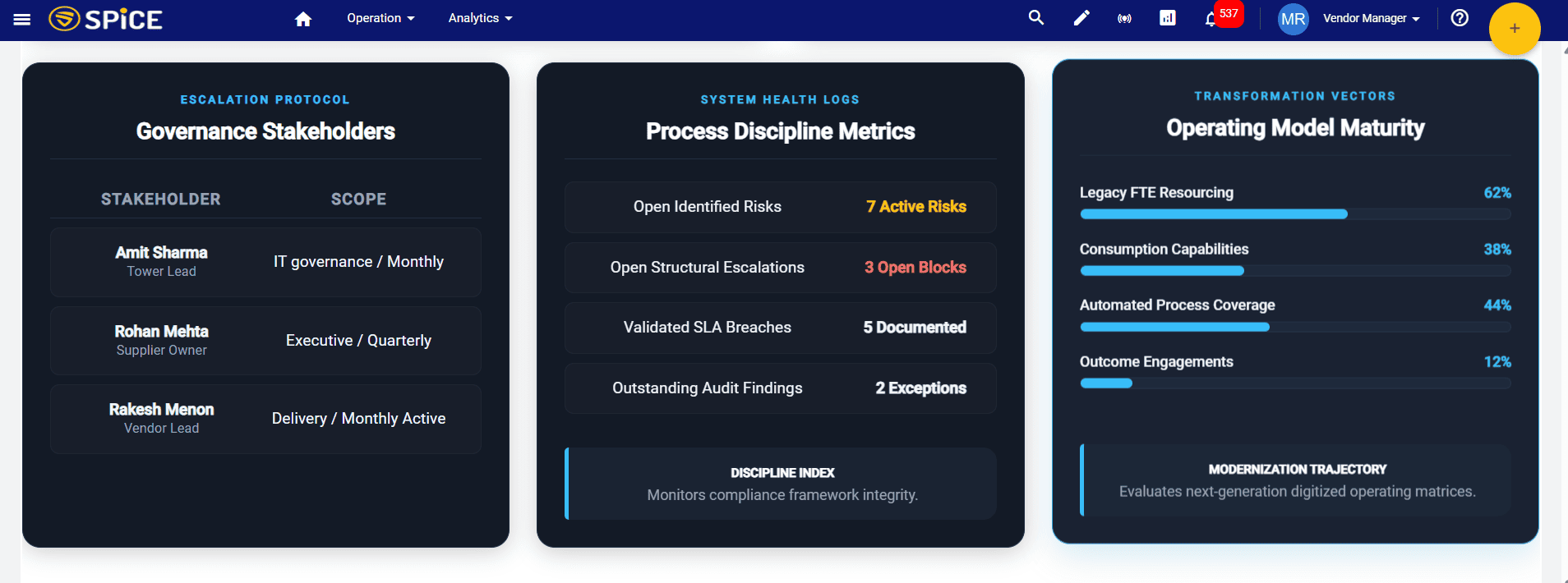
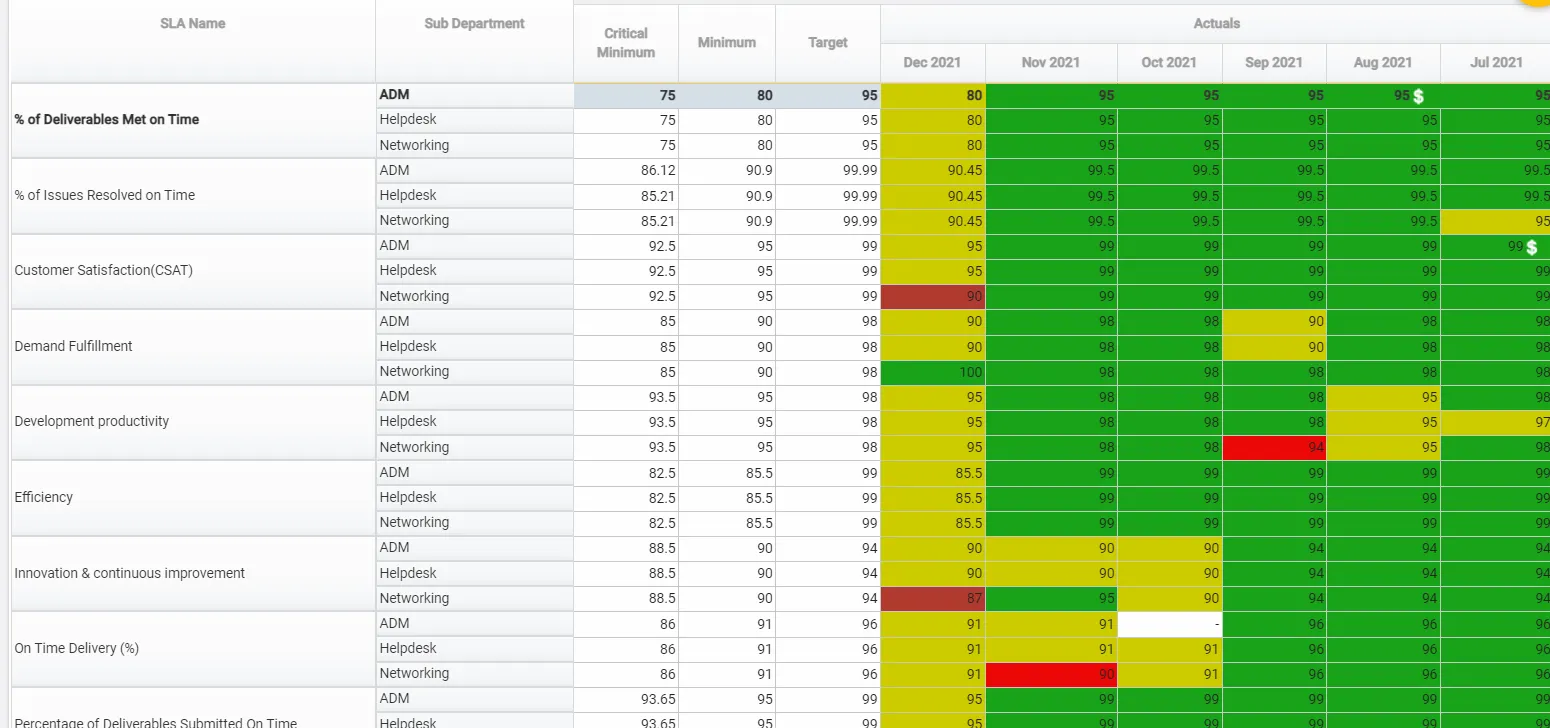
Continuously monitor vendor risk, performance, and compliance. Get contextual alerts for vendor adverse events like data breaches, legal issues, natural disasters and more for proactive mitigation. Identify performance risk by tracking SLAs and KPIs for every vendor and generating SLA Scorecards. Automate review cycles and build in triggers for escalation, issue management, and remediation should risk or performance scores change or trend outside acceptable thresholds.
Evaluate and Select Third-Parties
- Capture existing and prospective Vendor capabilities across technology, domain and process areas.
- Design and launch RFx questionnaires and automate the vendor data collection and evaluation process using Enlighta Procure.
- Compare and short-list vendors considering technical, commercial, and other factors.
Third-Party Due Diligence
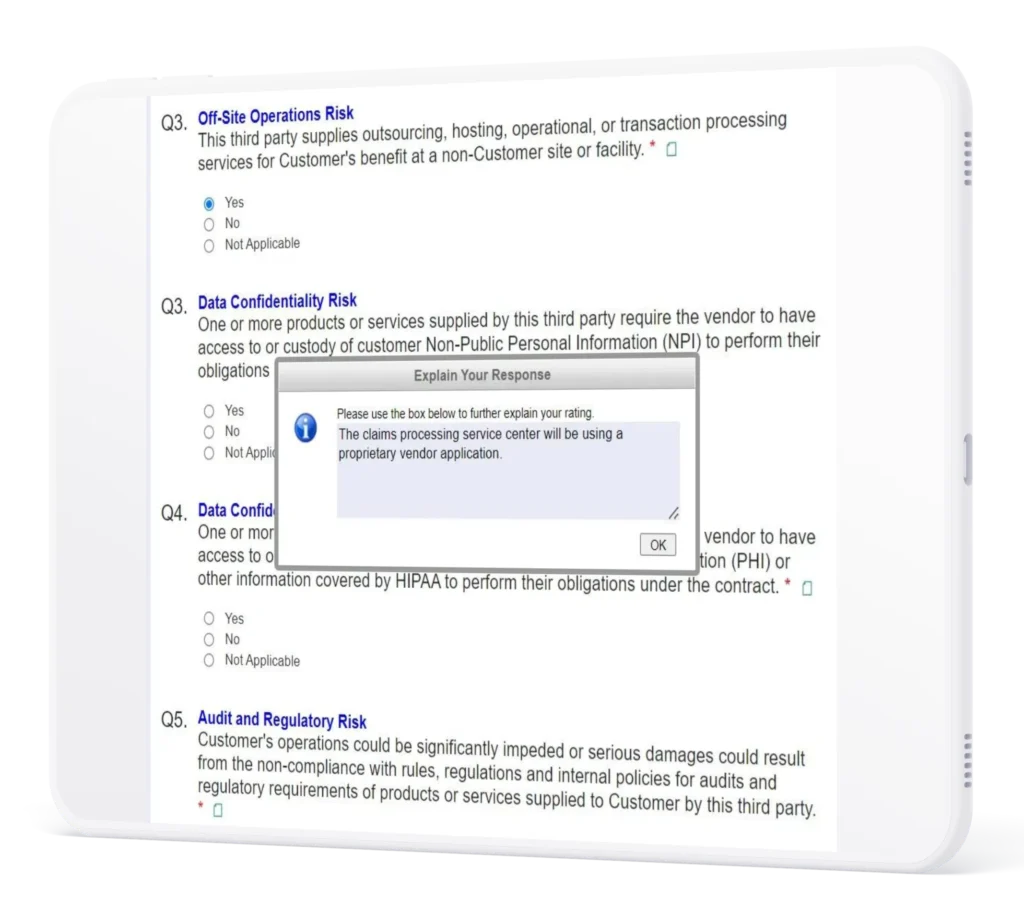
- Identify risk areas using initial risk assessments to determine confidential or PII data risk, operations risk, country risk, concentration risk and calculate the initial risk score to segment vendors based on criticality and determine applicable due-diligence assessments.
- Identify and assess vendor risk across InfoSec, technology, operations, ABAC, financials, and other evolving risk domains by launching built-in and customizable due diligence questionnaires (DDQs).
- Mitigate compliance and reputational risks by screening vendors for PEPs, AML/CTF Compliance, and sanctions against global watchlists..
- Centralize risk management by defining control points, collecting and analyzing assessments and evidence, updating risk scores, and collaboratively creating and implementing risk mitigation plans.
Third-Party Onboarding
- Enrich vendor profiles with critical company data, market trends, ESG ratings, and news updates. Capture 4th and 5th parties and integrate with leading external data sources of your choice for 360° visibility into each vendor.
- Automate the process of collecting information and documents from vendors and benefit from AI-driven review and validation of documents.
- Support vendor self-service updates of information such as Vendor Contacts.
- Automate back-end activities to support vendor onboarding such as Web APIs to create tickets for assets or licenses to Vendor users.
Contract Risk Mitigation
- Auto-generate watertight contracts using built-in contract templates and pre-approved clause library.
- Securely store and manage all contracts in a central, searchable, access-protected repository.
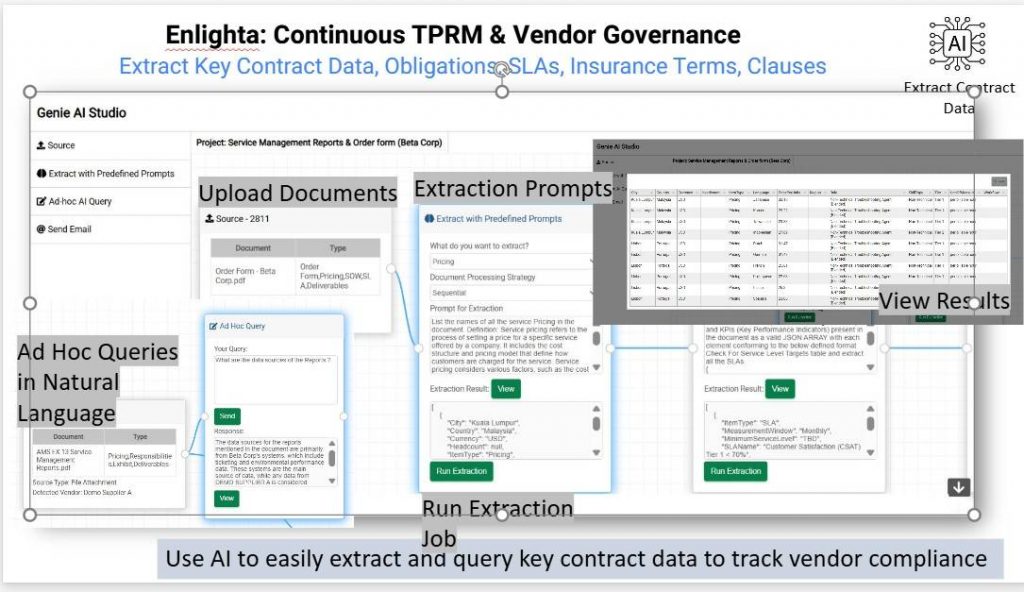
- Effortlessly extract key contract details like SLAs and KPIs, deliverables and obligations, expiry and renewal dates and more with AI-powered extraction.
- Eliminate delays in contract finalization by automating collaborative review and approval workflows.
- Track changes to contracts and automatically update impacted elements.
- Avoid risk of non-compliance by setting up contract expiry and renewal reminders for relevant stakeholders.
Adverse Events Monitoring
- Proactively identify and mitigate operational, financial, and reputational risk with real-time adverse events monitoring.
- Discover critical information related to your vendors via an extensive intelligence network encompassing trusted news sources out-of-the-box and configurable to include 10,000+ data feeds.
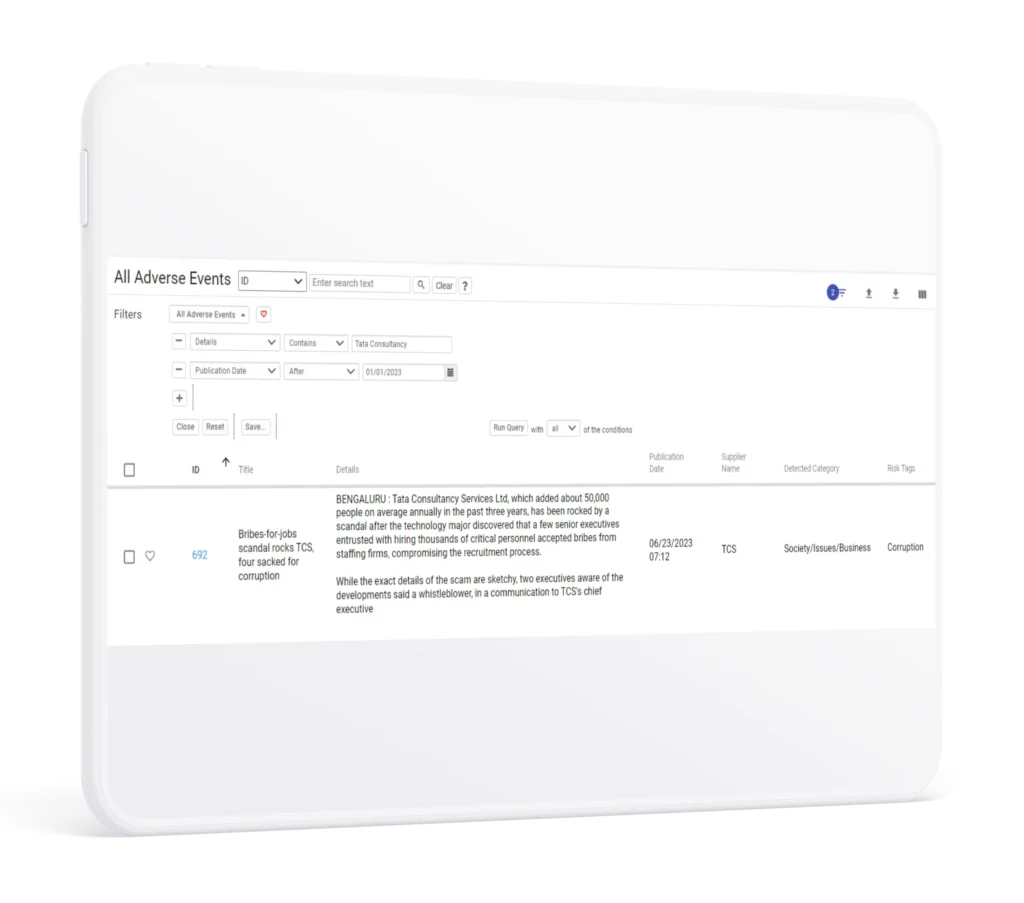
- Make informed decisions faster with AI-powered adverse event classification (e.g., legal issues, data breaches, financial troubles) impacting your vendors.
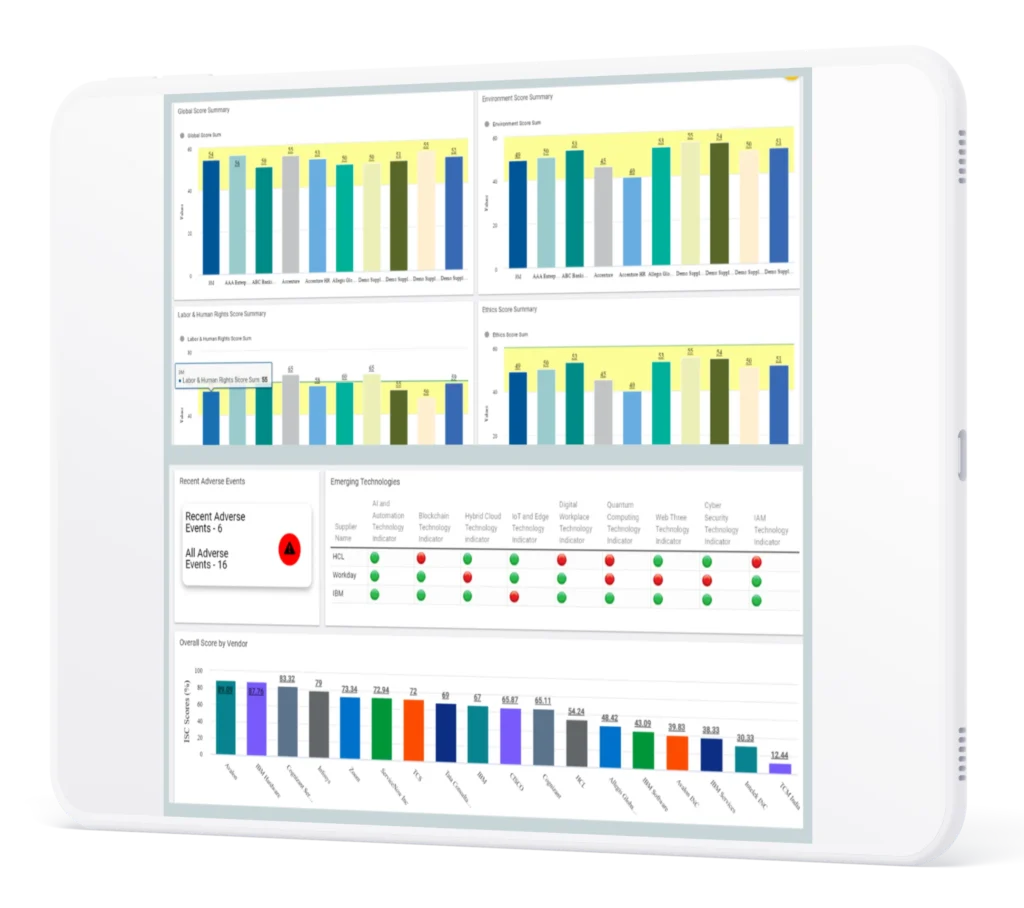
- Easily track and analyze all historical adverse events by vendor, publication date, and event details for comprehensive risk assessment and trend identification.
- Receive email notifications for any adverse events mentioned in the news cycle to proactively mitigate risks.
Audits and Compliance Controls
- Track and schedule operational, financial, security audits and track and resolve audit findings collaboratively with vendors.
- Design and launch compliance assessments to monitor internal compliance to processes and policies.
Vendor Portfolio Risk Management
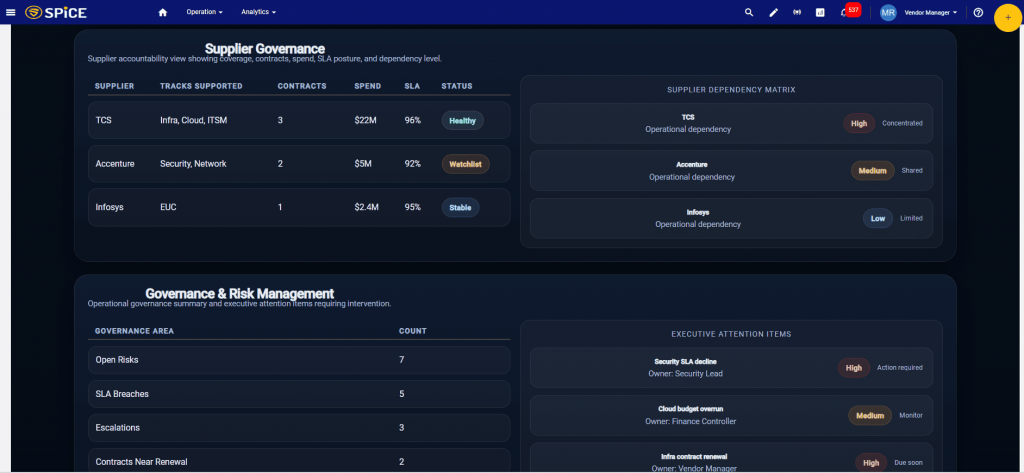
- Annual Segmentation of Vendors: Perform annual segmentation of vendors taking into account changes in vendor spend, concentration, new contracts and more.
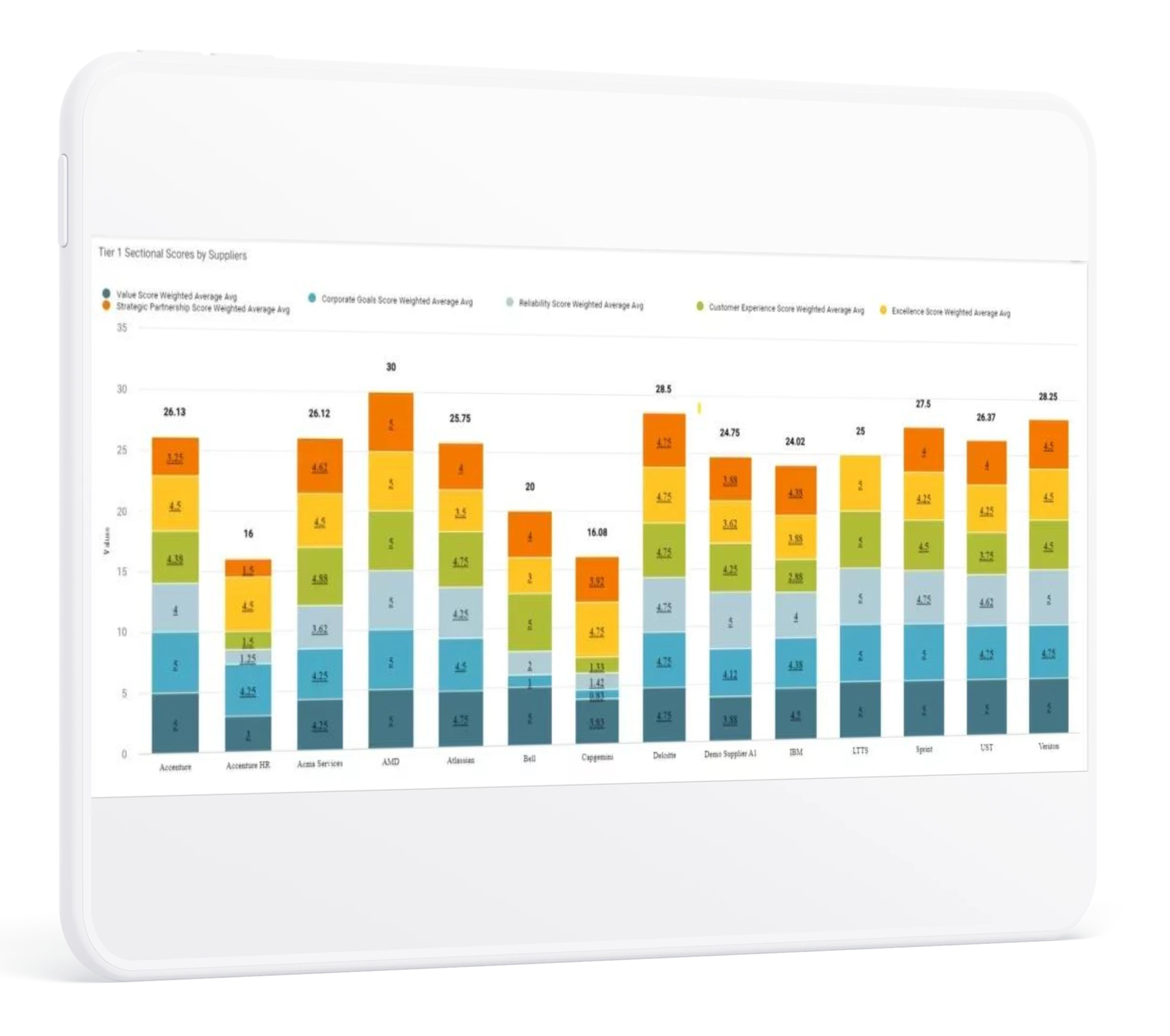
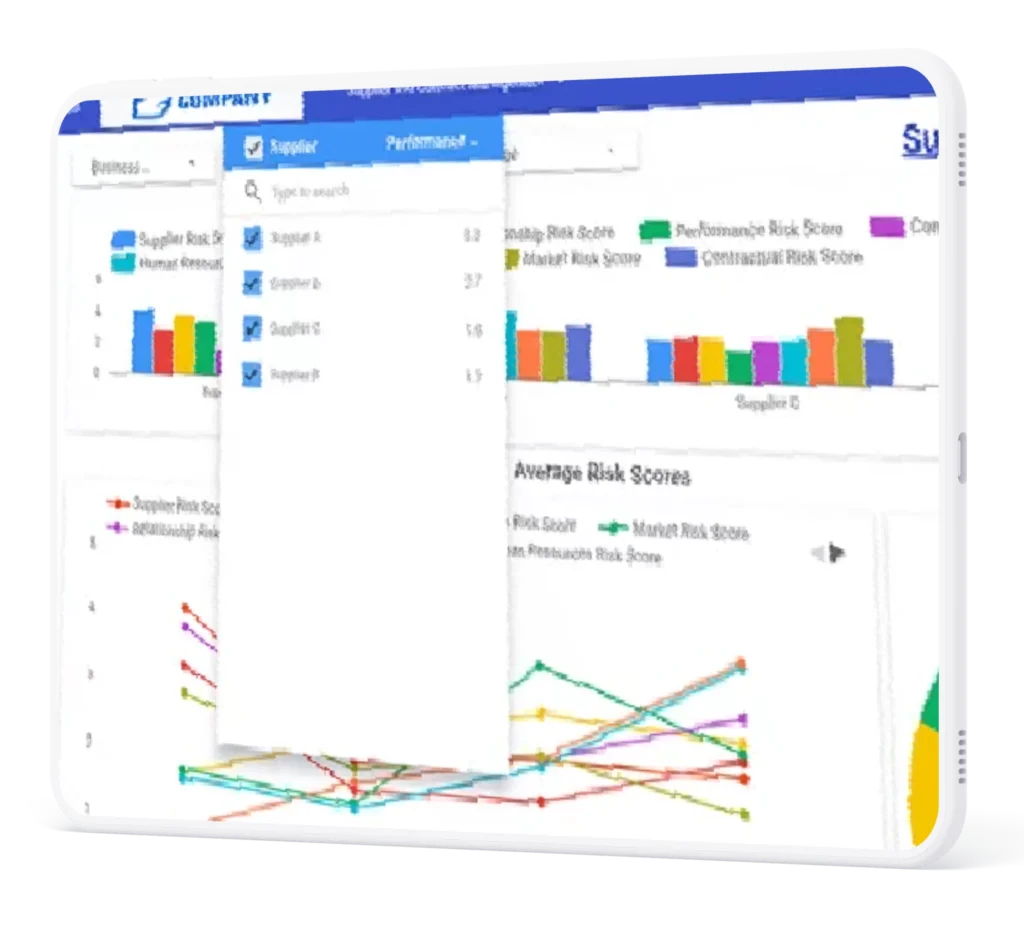
- Risk Scorecards: Generate and compare Risk Scorecards across vendors using internal and external risk indicators.
Ongoing Governance and Relationship Management
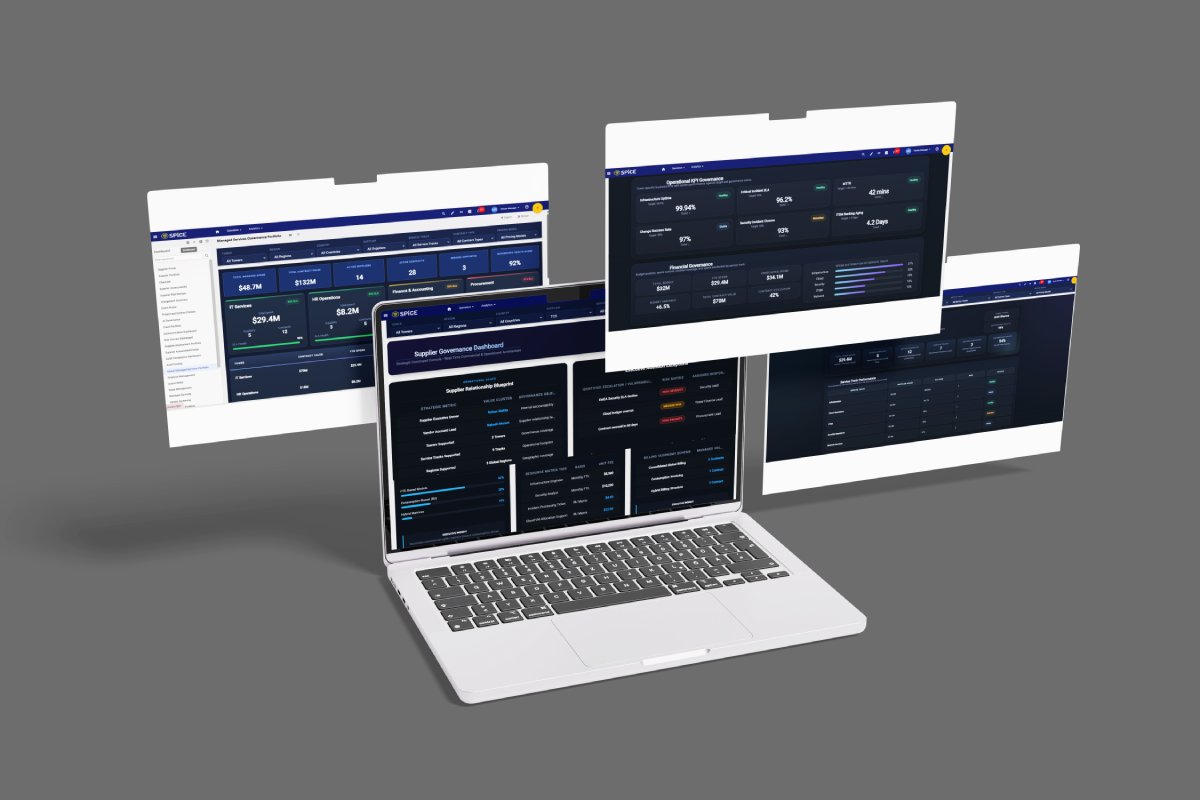
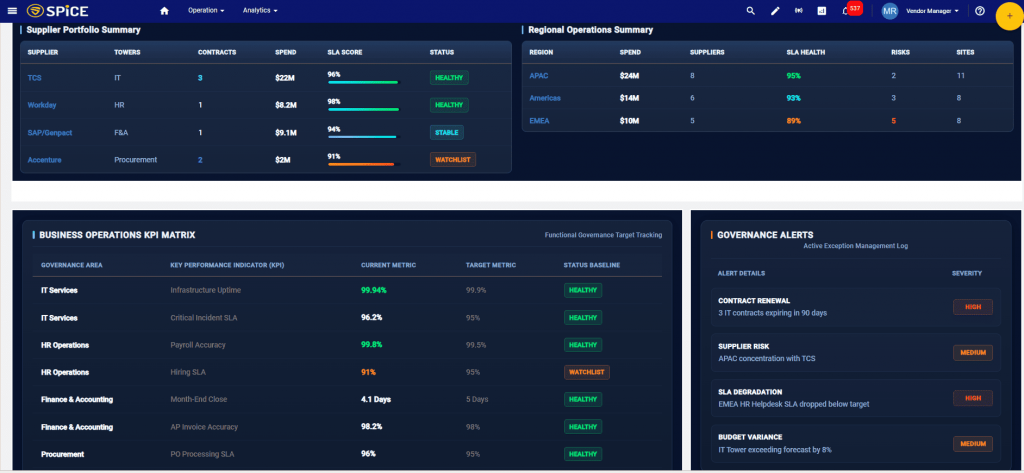
- Continuously reduce value leakage and optimize supplier relationships with Enlighta Govern.
- Mitigate financial and operational risk by capturing actual and forecasted vendor spend by month or year. Analyze vendor spend by various dimensions like category, cost center, and sector.
- Monitor Vendor performance to contractual SLAs and KPIs.
- Create, assign, resolve, and analyze all vendor-related issues on a single platform, fostering collaboration and transparency between stakeholders and suppliers.
- Regularly assess the health of your strategic supplier relationships through automated and configurable surveys, gathering valuable feedback on various dimensions like alignment, performance, risk, compliance, quality, capabilities, and ESG.
- Schedule and conduct business reviews at regular intervals (monthly, quarterly, etc.) to maintain open communication, capture actionable insights, and ensure ongoing relationship success, contributing to improved overall vendor performance and reduced long-term risks.
Enlighta benefits Third-Party Risk Management
- Auditable compliance to regulations such as regulations, policies, contracts by third parties & suppliers
- Internal and external compliance assessments
- Risk scorecards
- Automated action-items assigned to internal stakeholder groups
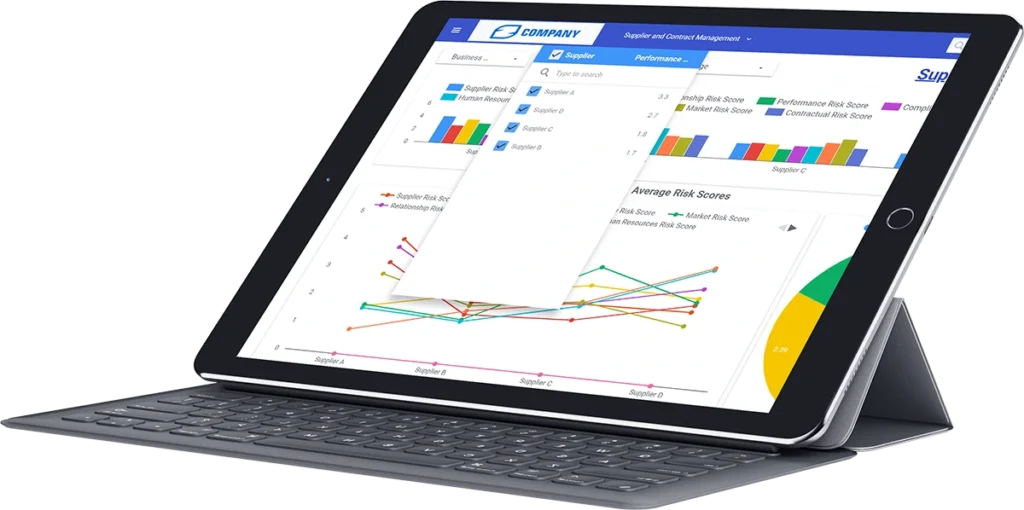
Out of box TPRM functions that can be easily adapted
- Automated triggers based on Initial or Residual Risk Rating of Third Parties
- One-Time or Recurring Due Diligence Questionnaires & Due Diligence Assessments
- Real-time visibility to business intake requestors
- Automated action items assigned to internal stakeholder groups
Risk Scoring & Auditable Due-Diligence Assessments Across multiple dimensions
- Location/Country
- Information Security/Cyber Risk
- Privacy
- Operational Competency
- Concentration
- Reputational
- Technology
- Sub-Contractor
- Financial Viability
- Financial Crimes
- Anti-Money Laundering
- Human Resources
- Background Screening
×
New Whitepaper Released
Discover the core elements of a robust AI governance framework.
Read Now →Frequently Asked Questions
Third-party risk management software is a digital platform that helps organizations identify, assess, monitor, and mitigate risks associated with vendors, suppliers, contractors, and other external parties. A robust third-party risk management tool automates due diligence questionnaires, tracks compliance, monitors adverse events in real time, and provides risk scorecards to give enterprises continuous, portfolio-wide visibility into their third-party risk exposure.
A common example is a bank conducting due diligence on a cloud technology vendor before signing a contract. Using a third-party risk management platform, the bank would assess the vendor's information security posture, financial stability, regulatory compliance, and operational resilience, and continue monitoring those risk dimensions throughout the vendor relationship, not just at onboarding.
Third-party risk refers to the potential for financial loss, reputational damage, regulatory penalty, or operational disruption arising from an organization's relationship with an external party, such as a vendor, supplier, service provider, or business partner. Because third parties often have access to sensitive data, systems, or critical processes, their risks become the organization's risks.
The third-party risk management process typically covers:
(1) vendor identification and intake,
(2) initial risk segmentation and scoring,
(3) due diligence and assessment,
(4) onboarding,
(5) ongoing monitoring of compliance, performance, and adverse events, and
(6) offboarding and exit management.
A mature process is continuous, not a one-time review at contract signing.
While frameworks vary, most TPRM programs are structured around five core phases: Identification and Intake (registering third parties and screening against global watchlists), Risk Assessment and Due Diligence (evaluating risk across multiple dimensions using DDQs and scoring), Onboarding (integrating qualified vendors with full profile enrichment), Continuous Monitoring (tracking performance, compliance, and adverse events on an ongoing basis), and Offboarding (managing contract exits, data returns, and risk closure).
The four generally recognized types of risk management are: Risk Avoidance (eliminating activities that expose the organization to risk), Risk Reduction (implementing controls to lower the likelihood or impact of a risk), Risk Transfer (shifting risk to a third party through contracts or insurance), and Risk Acceptance (acknowledging a risk and choosing to proceed without specific mitigation). In the context of third-party risk management, all four approaches may apply at different stages of the vendor lifecycle.
Third-party risk management is also referred to as vendor risk management (VRM), supplier risk management, third-party due diligence, or extended enterprise risk management. In regulated industries, it may be called third-party oversight or third-party governance.
Effective TPRM professionals typically need skills across risk assessment and analysis, contract review, regulatory compliance (e.g., GDPR, SOC 2, ISO 27001), vendor negotiation, data analysis and reporting, cybersecurity fundamentals, and stakeholder communication. Familiarity with third-party risk management platforms and audit methodologies is increasingly essential as programs scale.
To manage third-party risk effectively, organizations should: establish a formal TPRM policy and governance framework; tier their vendor portfolio by criticality; automate due diligence with standardized questionnaires; continuously monitor vendors post-onboarding for adverse events, compliance gaps, and performance issues; track contractual obligations through a centralized contract repository; and conduct regular reviews and risk rescoring, ideally supported by a purpose-built third-party risk management platform like Enlighta.
It is called third-party risk management because it addresses risks that originate outside the organization itself, specifically from "third parties" such as vendors, suppliers, contractors, and service providers (as opposed to first-party risks, which the organization owns internally, or second-party risks, which arise from direct customer relationships). Managing these external risks requires a distinct framework since the organization has limited direct control over third-party operations.
Several widely used frameworks guide TPRM programs, including the NIST Cybersecurity Framework, ISO 27036, the Shared Assessments TPRM framework, and guidance from regulatory bodies such as the OCC (for banks), the EBA (in Europe), and the RBI (in India). These frameworks typically address vendor identification, risk tiering, due diligence standards, contract requirements, ongoing monitoring, and exit procedures.